stoichiometry practice problems with answers pdf
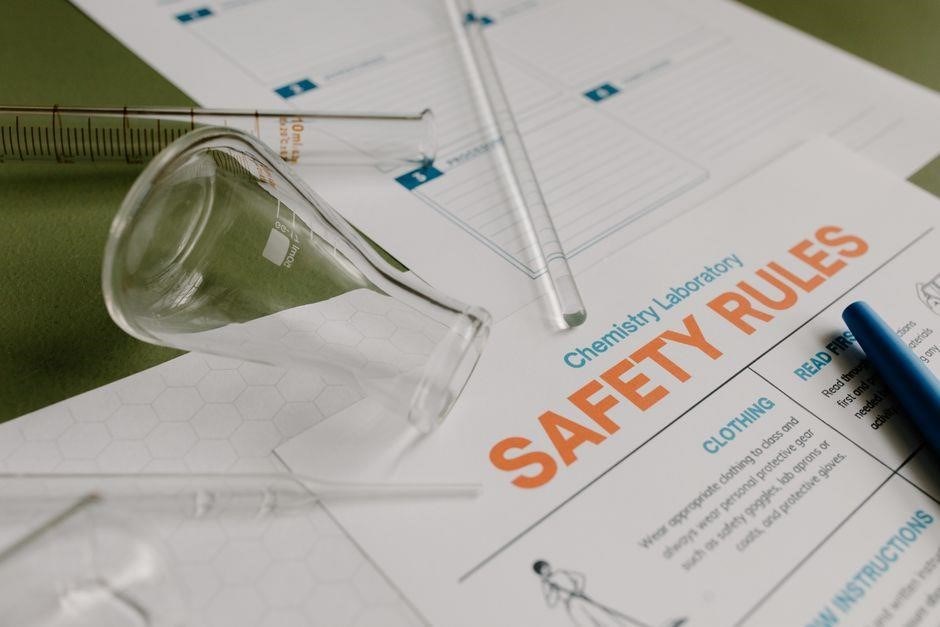
Explore downloadable PDFs featuring stoichiometry practice problems with fully worked answers. Each set covers balanced equations, mole–mass conversions, gas law applications, percent yield, and limiting reactant scenarios, mirroring classroom PowerPoint slides and interactive examples.for students.
1.1 Overview and Benefits
Stoichiometry practice problems with answers PDFs offer a concise, self‑contained resource for students and instructors alike. Each document presents a curated set of equations—from simple mole‑to‑mass conversions to complex gas‑law scenarios—accompanied by step‑by‑step solutions. The format mirrors contemporary PowerPoint lessons, using clear diagrams, color‑coded coefficients, and concise explanatory text that aligns with introductory chemistry curricula.
Key benefits include:
- Immediate feedback: Answers appear directly after each problem, letting learners verify their work instantly.
- Scalable difficulty: Problems range from basic balancing to multi‑step limiting‑reactant calculations, supporting differentiated instruction.
- Time efficiency: The PDF layout eliminates manual note‑taking, allowing students to focus on conceptual understanding.
- Portability: Accessible on laptops, tablets, or printed copies, making it ideal for classroom, homework, or exam review.
- Resource integration: PDFs can pair with online calculators or interactive worksheets for a blended learning experience.
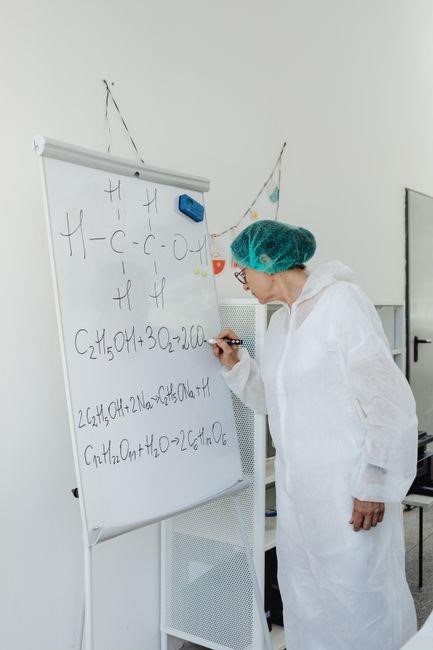
Students can download the PDFs for offline study, while teachers can incorporate them into lesson plans or assessment kits. The high‑resolution formatting keeps even complex equations legible when printed or zoomed on a screen.
Because the solutions are fully worked, users can trace each algebraic manipulation, reinforcing the link between stoichiometric principles and practical application. This approach fosters mastery of both the “how” and the “why” behind quantitative chemical analysis.
Additionally, the PDFs include a brief glossary of key terms, a summary of stoichiometric rules, and practice quizzes for formative assessment. This comprehensive package supports self‑paced learning and guided instruction.
By integrating these resources into a curriculum, educators provide consistent, high‑quality practice that aligns with learning objectives and assessment standards across multiple educational levels.
Problem Types Included
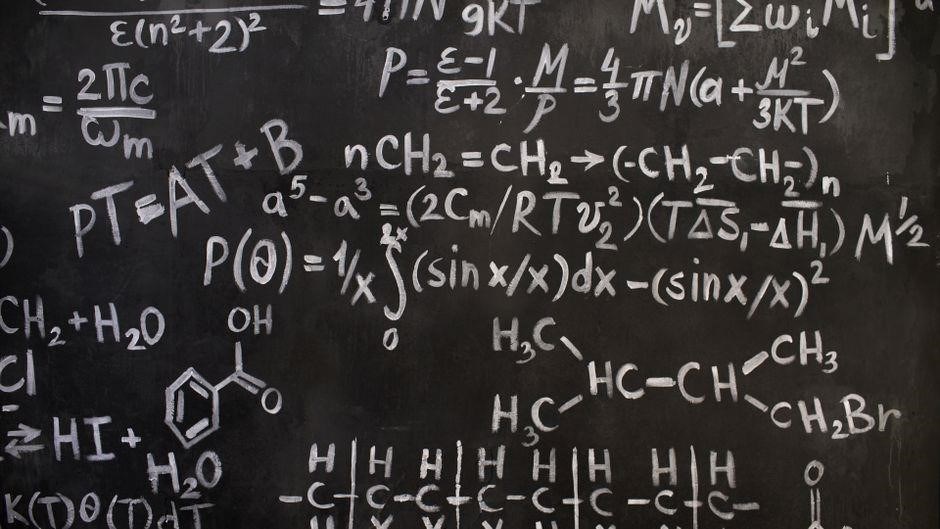
PDFs feature balanced‑equation practice, mole‑to‑mass conversions, gas‑law applications, percent yield calculations, and limiting‑reactant scenarios. Each type offers step‑by‑step solutions, mirroring classroom slides with diagrams and clear coefficient usage. Print.
2.1 Moles and Mass Problems
These PDF worksheets focus on converting between moles, grams, and particle counts using stoichiometric coefficients from balanced equations. Students determine the mass of a reactant or product from a given amount of another species, applying Avogadro’s number and molar mass data. Each problem presents a clear chemical equation and a question such as “Calculate the mass of calcium carbonate produced when 5.00 g of calcium chloride reacts completely.” Solutions walk through the steps: balance the equation, identify the mole ratio, convert the known quantity to moles, apply the ratio to find moles of the target species, and finally convert to grams.
Additional practice sets cover multi‑step reactions where intermediates are involved, requiring students to carry forward mole ratios through successive equations. Problems also feature unit conversions between grams, milligrams, and kilograms, reinforcing the importance of significant figures. The answer key provides full calculations, highlighting common pitfalls such as misreading coefficients or neglecting to convert units before applying the ratio.
Students can use these PDFs to self‑check their work, compare with the provided solutions, and identify areas needing improvement. The format is suitable for individual study, classroom worksheets, or homework assignments, ensuring that learners can practice stoichiometry consistently and confidently. Students practice unit conversions to reinforce significant figures daily. now!!
Download and print to practice daily.
Percent Yield Calculations
These PDFs offer percent yield problems with step‑by‑step solutions. Students convert grams to moles, apply stoichiometric ratios, and compute experimental yield versus theoretical yield. Answers are fully worked out for self‑check. Use the solutions to spot common calculation errors now!!! Practice!!
3.1 Percent Yield Problem Examples
Example 1: A student synthesizes 5.00 g of product from 10.00 g of reactant. The balanced equation predicts 8.00 g theoretical yield. Percent yield = (5.00 g ÷ 8.00 g) × 100 % = 62.5 %.

Example 2: 2 mol of A reacts with 3 mol of B to produce 4 mol of C. The stoichiometric ratio gives a theoretical yield of 4 mol of C. Isolated yield is 1.50 mol. Percent yield = (1.50 ÷ 4) × 100 % = 37.5 %.
Example 3: 15.0 g of NaCl reacts with excess H₂SO₄ to form Na₂SO₄ and HCl. The balanced equation shows 2 mol NaCl produce 1 mol Na₂SO₄. If 12.0 g Na₂SO₄ is collected, calculate percent yield. Molar mass NaCl = 58.44 g mol⁻¹; Na₂SO₄ = 142.04 g mol⁻¹. Theoretical yield = (15.0 g ÷ 58.44 g mol⁻¹) × (1 mol Na₂SO₄ ÷ 2 mol NaCl) × 142.04 g mol⁻¹ = 14.5 g. Percent yield = (12.0 ÷ 14.5) × 100 ≈ 82.8 %.
Example 4: In a two‑step synthesis, 20.0 g of compound X yields 12.0 g of intermediate Y (step 1). Step 2 converts 12.0 g Y to 9.0 g Z. Calculate overall percent yield. Step 1 percent yield = (12.0 ÷ 20.0) × 100 = 60 %. Step 2 percent yield = (9.0 ÷ 12.0) × 100 = 75 %. Overall yield = 0.60 × 0.75 = 0.45 → 45 %.
Students can extend practice by creating their own percent‑yield scenarios. For instance, start with 25.0 g of a reactant and assume an experimental yield of 18.0 g. The percent yield is (18.0 ÷ theoretical) × 100. Adjusting the experimental value demonstrates how impurities or incomplete reactions reduce yield, reinforcing the importance of accurate measurements and careful experimental technique.!!!!!!

Gas Stoichiometry Content
PDF sets feature gas‑stoichiometry drills: balanced equations, ideal gas law, mole‑volume conversions, and real‑world examples. Each problem includes step‑by‑step solutions, allowing students to verify calculations and grasp gas‑reaction relationships Practice now!daily!.
4.1 Ideal Gas Law Application Problems
These downloadable PDFs present a curated set of ideal-gas-law problems designed for high-school and early-college chemistry courses. Each worksheet begins with a concise statement of the problem, followed by a step-by-step solution that demonstrates how to apply the equation PV = nRT in a real-world context. Students will practice converting between moles, volume, pressure, and temperature, and will learn to identify the most efficient method for each scenario. The solutions include unit‑analysis checks, common pitfalls, and a brief discussion of how deviations from ideal behavior can affect the results. All problems are accompanied by a neatly formatted answer key that explains the reasoning behind each step, allowing learners to self‑check and reinforce key concepts. The PDFs are fully searchable, making it easy to locate specific topics such as partial pressures, combined gas laws, or stoichiometric calculations involving gas mixtures. By integrating these worksheets into daily study routines, students can build confidence in manipulating the ideal gas law and applying it to stoichiometric calculations in a variety of contexts.
Students can print these PDFs, solve problems independently, and use the answer keys to check accuracy. The format supports both classroom use and self‑study, making stoichiometry practice accessible anytime, anywhere.
Download the PDFs from the university repository or request them via the chemistry department website.
Enjoy mastering stoichiometry with these resources.
Enjoy mastering stoichiometry with these resources;

Limiting Reactant Scenarios
Download PDFs featuring limiting reactant problems with step‑by‑step solutions. Each worksheet presents balanced equations, mole ratios, and calculations to identify the reactant that limits product yield. Answers include detailed reasoning and common error checks.
5.1 Identifying Limiting Reactants in Practice
Students can download a PDF that contains a series of limiting‑reactant exercises modeled after the PowerPoint slides found online. Each worksheet presents a balanced chemical equation, the initial masses of two reactants, and a set of questions that guide the learner through the standard procedure: convert masses to moles, compare the mole ratio to the stoichiometric ratio, and determine which reactant is consumed first. The solutions are fully worked out, showing every algebraic step and the final answer in both moles and grams. The PDF also includes a quick‑check section that highlights common pitfalls, such as misreading coefficients or ignoring significant figures. By solving these problems, students reinforce the concept that the limiting reactant dictates the maximum amount of product that can be formed. This principle also appears in gas‑stoichiometry and percent‑yield examples, providing a cohesive learning experience. The resource is designed for grades 11–12 chemistry and can be used as a classroom handout or a self‑study guide. Additionally, the document provides a summary table of common stoichiometric conversions and a glossary of key terms to support quick reference during exams. Students test their understanding by attempting the problems at the end of each section. This approach reinforces retention.

Answer Key Presentation
The answer key PDF presents solutions in a clean, step‑by‑step format. Each problem includes the balanced equation, mole calculations, and final product mass. Answers are highlighted for quick review, and a summary table lists key stoichiometric ratios. It also includes a self‑check for review now
6.1 Structured Answer Formats
Each PDF solution set follows a consistent format that improves clarity. The page begins with the problem statement in bold, followed by a numbered list of calculations. Every step shows the formula used, the numerical value, and a brief comment explaining the reasoning. This structure helps students trace the logic from reactants to products without confusion.!
To aid quick verification, the final result is highlighted in a shaded box and followed by a concise summary of the stoichiometric ratio. An alternative method is appended in italics, allowing learners to compare approaches. A “Check Your Work” checkbox appears beside each answer, encouraging active engagement. A summary table at the bottom lists all problems, answers, and the percentage of correct responses.
Students can annotate directly on the PDF today, using the shaded boxes to note key points. The interactive checkboxes allow them to mark completed steps, while the summary table provides instant feedback. This format supports self‑paced learning and makes it easy to review mistakes and reinforce concepts after each practice set.
Each answer page also features a “Key Insight” sidebar that highlights common pitfalls, such as misreading coefficients or overlooking unit conversions. This sidebar appears in a light gray box, making it easy to scan while working through the calculations. The PDF is searchable, allowing students to locate specific terms quickly and review the solution steps as needed.!

Supplementary Tools and Resources
Access free online stoichiometry calculators, interactive worksheets, and template PDFs that auto‑populate molar masses and coefficients. Use the built‑in unit‑conversion tool, step‑by‑step solution generator, and printable practice sets for instant feedback. Download tools from the university portal.
7.1 Online Calculators and Templates
Students and instructors can now leverage a suite of web‑based stoichiometry calculators that automatically solve for moles, masses, gas volumes, and percent yields. By entering the balanced equation, initial amounts, and desired product, the calculator returns step‑by‑step solutions and a downloadable PDF of the problem set with complete answers. The templates are fully customizable: users can adjust the number of reactions, choose between ideal gas or real‑gas corrections, and toggle unit conversions. Each template includes a table of atomic weights, a reaction coefficient matrix, and a solution key that highlights the logic behind each step. The interactive interface also offers a drag‑and‑drop feature for building balanced equations, which is ideal for visual learners. For educators, the platform provides a “teacher mode” that allows the creation of quizzes, automatic grading, and instant feedback reports. The PDFs can be printed or shared electronically, making them perfect for remote learning environments! These tools provide error checking for stoichiometric calculations today. Finally, the resource library includes a repository of pre‑made worksheets covering topics such as limiting reactants, gas stoichiometry, and yield calculations, all aligned with common curriculum standards. By integrating these online calculators and templates into the learning workflow, students gain hands‑on experience with real‑world chemical calculations while receiving instant, accurate feedback that reinforces conceptual understanding.
Explore downloadable PDFs featuring stoichiometry practice problems with fully worked answers. Each set covers balanced equations, mole–mass conversions, gas law applications, percent yield, and limiting reactant scenarios, mirroring classroom PowerPoint slides and interactive examples.for students. 1.1 Overview and Benefits Stoichiometry practice problems with answers PDFs offer a concise, self‑contained resource for students and instructors alike.…